WhatsApp/Telegram: What It Is, History, Features, and Numbers in Brazil
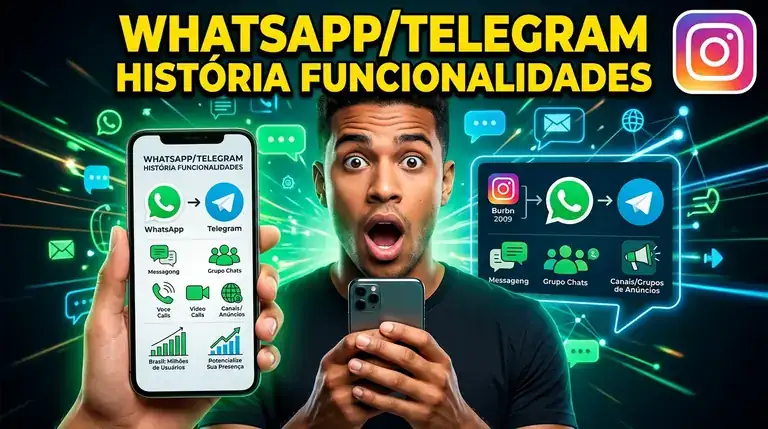
WhatsApp and Telegram are no longer just messaging apps. For affiliates, deal communities and small sales teams, they have become distribution, relationship and sales channels. Understanding groups, channels, links and message cadence helps turn scattered attention into an organized operation.
This guide explains what WhatsApp and Telegram are, how each platform evolved, which features matter for online sellers in Brazil, and how to use both together to promote products more efficiently.
What Are WhatsApp and Telegram?
WhatsApp is Brazil's most widely used messenger. It supports direct conversations, groups, communities, broadcast lists and business profiles. Its strength is proximity: customers already open the app several times a day and tend to react quickly to relevant messages.
Telegram is a messaging platform known for large groups, public channels, bots, cloud sync and advanced organization. It is especially useful for deal channels, alerts, recurring campaigns and searchable product history.
A Short History of WhatsApp
WhatsApp was created in 2009 by Jan Koum and Brian Acton with a simple idea: fast mobile messaging based on the phone contact list. It grew because it made communication cheaper and easier than SMS, then added audio, photos, videos, calls, WhatsApp Web, Communities, Channels and business tools.
For Brazilian sellers, WhatsApp became almost universal infrastructure. Customers do not need to learn a new channel; they already use it for daily communication.
A Short History of Telegram
Telegram was launched in 2013 by Nikolai and Pavel Durov. From the beginning, it focused on fast cloud messaging and flexible community tools. Over time it added channels, high-capacity groups, bots, polls, folders, pinned messages, scheduling and powerful search.
For affiliates and deal communities, those features matter because a Telegram channel can work like a structured storefront with product history, links, announcements and recurring campaigns.
Why These Channels Matter for Affiliates
Affiliate sales depend on three things: showing the right offer to the right audience, doing it consistently, and measuring which source converts. WhatsApp and Telegram support all three.
WhatsApp is strong for trust, quick replies and relationship-driven conversion. Telegram is strong for organization, scale, public channels and searchable offer history. Together, they create a more predictable routine for publishing, tracking and improving campaigns.
Key Features for Sales
Groups and Communities
Groups bring people with the same interest together. They work best when the topic is clear, the schedule is predictable and offers are curated for the audience.
Channels
Channels are ideal for announcements and product drops. Telegram has long used this format, and WhatsApp Channels expanded this style of one-to-many communication.
Pinned Messages and Search
Pinned messages reduce repeated questions, while searchable history helps new members find previous offers, rules and important links.
Tracked Links
Affiliates need to know where each click came from. Tags, UTMs and separate links by channel reveal whether the result came from a WhatsApp group, Telegram channel, blog article, video or campaign.
Publication Automation
Automation helps organize the calendar, distribute offers at planned times and keep multiple groups and channels active without repetitive manual work.
How DivulgaNinja Helps
DivulgaNinja was built for people who promote products in groups and channels. It helps organize links, schedule publications, track campaigns and maintain a professional offer routine. For teams managing many channels, the time saved can reach 6 hours per day.
FAQ
Which channel converts better?
WhatsApp usually wins on proximity and trust. Telegram usually wins on organization and large-scale content history. Testing both with tracked links gives the clearest answer.
Can I start with a small audience?
Yes. A small engaged group can generate the first sales when offers match the audience.
The questions our community asks the most
These are the questions that come up the most in our groups and support channels about this topic. Each one is answered straight to the point.
Do I need a company or a large audience to start?
No. Most programmes accept individuals, and groups with a few dozen engaged people are enough to be approved and make the first sales.
Where should I promote my affiliate links?
WhatsApp groups and Telegram channels convert best because the offer reaches people who already opted in. Social profiles work as the funnel that keeps feeding those groups.
Do I need a company to be an affiliate?
Not to start. Most programs accept individuals and pay directly to the registered bank account. Incorporating becomes a choice once revenue grows.
Can I be an affiliate without showing my face?
Yes. Many affiliates work entirely through messaging groups and channels using text, product images and links. Trust comes from the quality and consistency of the offers.
How do I post to many groups at once?
By organising your offer catalogue and schedule in one place: you set the times and the system publishes to every connected group and channel. That is what keeps dozens of channels active without copy-pasting all day.
Which affiliate program is best to start with?
Start with the store your audience already buys from: fashion audiences fit Shein and Shopee, tech audiences fit Amazon, AliExpress and Mercado Livre. Once you have rhythm, add a digital product for the higher commission per sale.